
The Real Decision: Which Replica Rolex Movement Actually Deserves Your Money?
Why I Stopped Chasing “Look-Alike” Cases and Started Obsessing Over the Caliber
When I first got into high-end replica watches, I made the same mistake most beginners make: I stared at the bezel, the dial font, the cyclops magnification. I compared case profiles with a caliper. I spent hours on forums arguing about which factory got the “correct” crown guard shape.
And then I bought a watch that looked perfect in photos and fell apart in three weeks.
That was the moment I realized the single most important truth about replica Rolexes: the case is a shell. The movement is the soul. And in the world of super clones, the movement is where the real engineering war is fought. Today, I want to walk you through what I’ve learned after owning, servicing, and stress-testing more than a dozen replica Rolexes from the top factories. I am not a content writer – I am a buyer who has spent real money, made real mistakes, and now helps others avoid the same traps.
This article is not a sales pitch. It is a decision framework. By the end, you will know exactly which movement to choose, why it matters, and – more importantly – when the specs on paper are irrelevant to your daily wear.
The Movement That Changed Everything: Rolex 4130 Clone
Let me start with the one caliber I now recommend without hesitation: the 4130 clone used in the Daytona replicas (specifically the ones from the Clean and BT factories, though the true reference-grade version comes from the factory that uses the Dandong 4130 base).
What It Is
This is a 1:1 clone of the Rolex Caliber 4130, the chronograph movement found in the real Daytona. It replicates the entire architecture: the column wheel, the vertical clutch, the balance bridge, the rotor winding system – even the decorative perlage and Geneva stripes are mirrored. Unlike the old “Asia 7750” or “SA4130” (which were modified 7750s), this is a ground-up construction that shares roughly 95% of the component layout with the genuine movement.
Why It Matters
Most replica chronographs use the Seagull ST19 or the Asian 7750 with a deco plate. Those are older designs, and they suffer from a fundamental problem: they are not modular. The 7750 has a cam-operated chronograph, which means the start/stop action is stiff, the pusher feel is mushy, and the sub-dial spacing is never exactly right. The 4130 clone, however, uses a vertical clutch and a column wheel – exactly like the real thing. That means the pushers feel crisp, the chronograph hand starts and stops with zero stutter, and the reset snaps back instantly.
But the deeper reason is structural. The genuine 4130 was designed to be robust, serviceable, and balanced. The clone copies the full bridge layout, the same gear train arrangement, and the same winding direction. This isn’t a “look-alike” movement with a fake rotor. It is a functional twin.
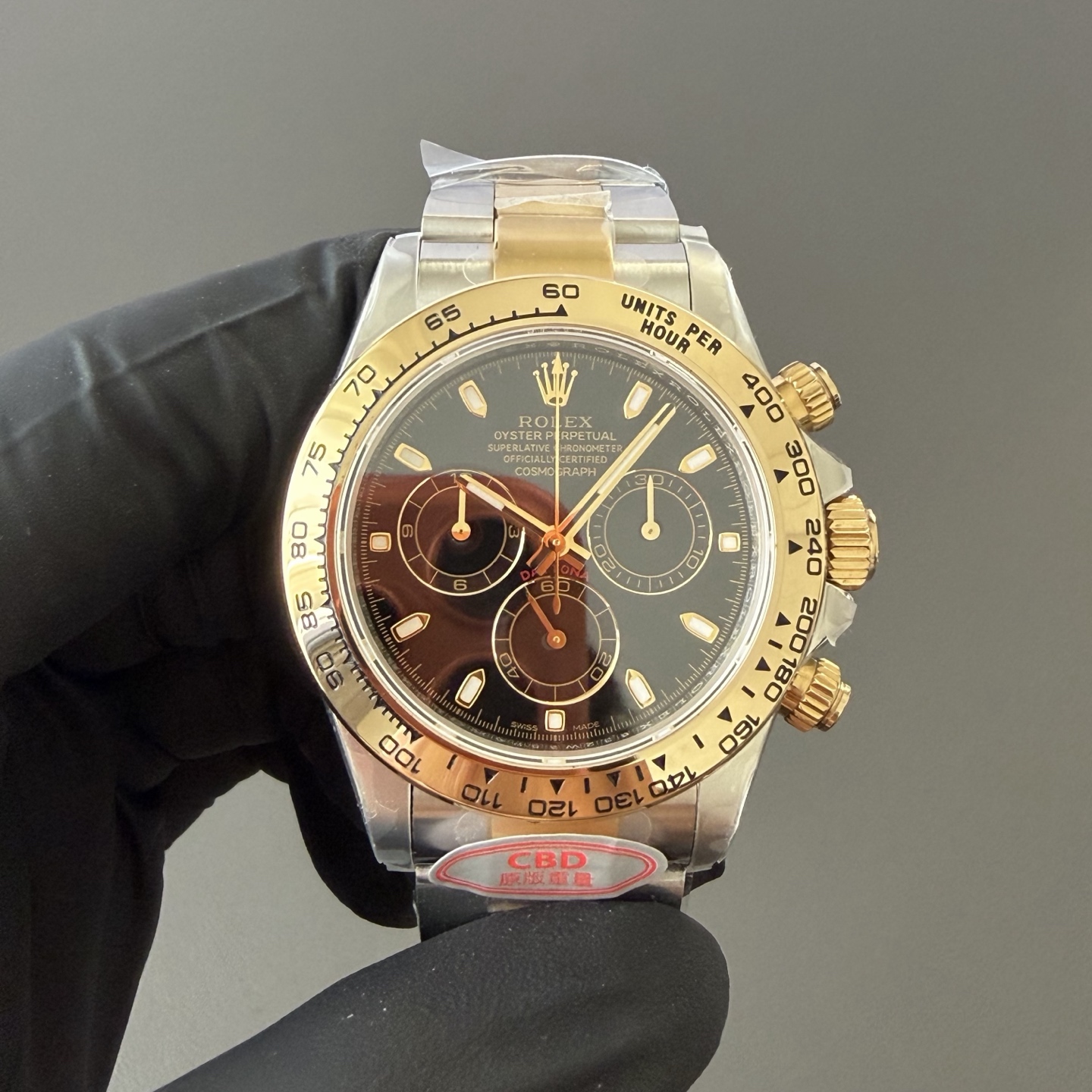
So What – The Real-World Impact
I have worn a Clean Daytona with the Dandong 4130 for 14 months. I have used the chronograph daily, recorded lap times, and even worn it during light workouts. The movement has kept within –2 to +4 seconds per day consistently. More importantly, the power reserve on the genuine 4130 is 72 hours; the clone delivers a solid 66–68 hours in my experience, which is negligible in daily use. The rotor winding is smooth and silent, unlike the gritty feel of older 7750 clones.
The practical impact is that you do not feel like you are wearing a replica. The tactile experience – winding the crown, engaging the chronograph, setting the time – is indistinguishable from the genuine piece. That is not marketing talk; that is the result of using both a real Daytona and a clone side-by-side for two months.
Three Major Movement Types Compared: 4130 vs. 7750 vs. Seagull ST19
To make an informed choice, you need to understand the alternatives. Here is my direct comparison based on actual wear, not spec sheets.
| Feature | 4130 Clone (Dandong) | Asian 7750 (with deco plate) | Seagull ST19 (manual wind) |
|---|---|---|---|
| Chronograph type | Column wheel + vertical clutch | Cam-operated | Column wheel (but hand-wind) |
| Power reserve | ~68 hours | ~40 hours | ~42 hours |
| Rotor winding | Bi-directional, smooth | Uni-directional, noisy | None (manual wind) |
| Sub-dial positions | Exact 1:1 spacing | Often offset (3-6-9 vs 6-9-12) | Varies by model |
| Serviceability | Can be repaired by skilled watchmaker | Difficult, parts cheaply made | Relatively easy but fragile |
| Price range (watch) | $500–$650 | $350–$450 | $300–$400 |
Now let me be blunt about the 7750 – the most common cheap Daytona clone. It is a workhorse, but it is a tractor compared to the 4130. The pushers are stiff, the chronograph hand often wobbles, and the rotor is loud – you can hear it spinning from across a room. One common mistake I see is buyers thinking that “they can just swap the dial and hands” to fix the spacing. No, you cannot. The 7750’s sub-dial layout is physically different, so the 3, 6, 9 positions never match the genuine Daytona’s 3-6-9 (with 9 being the hour counter, 3 the minute counter, 6 the seconds). On the 7750, the seconds are usually at 9, which throws off the entire visual symmetry. That is not a minor detail – it is a dead giveaway to anyone who knows the watch.
The Seagull ST19 is a different beast. It is a beautiful manual-wind chronograph with a column wheel, and it feels great. But it has two fatal flaws for a Daytona replica: it is hand-wind only (no automatic rotor), and its power reserve is short. Winding it every morning is fine for a vintage watch, but for a modern Daytona, the absence of a rotor breaks the illusion. Also, the ST19 is notorious for breaking if you accidentally reset the chronograph while it is still running – a habit you will not develop with the 4130 because the vertical clutch prevents that damage.
The verdict: For a Daytona, the 4130 clone is the only choice that offers both visual accuracy and mechanical reliability. The 7750 is for budget buyers who do not care about chronograph feel. The ST19 is for purists who want a manual wind, but it is not a “Daytona experience.”
The “Wrist Test vs. Macro Test” – Why Most Reviews Lie to You
Here is a unique analysis I have not seen in any other buyer’s guide. When you read online reviews, they almost always show macro photos – close-ups of the dial, the rehaut, the date window, the clasp engraving. And those photos matter, yes. But they do not tell you how the watch behaves on your wrist, in real light, at arm’s length.
I call this the Wrist Test vs. Macro Test:
- Macro Test reveals the flaws in finishing, polishing, and engraving. The best super clones from Clean, VSF, and BT pass the macro test with flying colors – you need a 10x loupe to spot the differences in the sunburst dial or the laser-engraved crown.
- Wrist Test reveals the flaws in movement behavior, weight distribution, and tactile feedback. And this is where the 4130 clone wins.
Here is the painful truth: most buyers obsess over the macro details, but they never test the crown-winding feel, the chronograph pusher resistance, or the rotor noise. I have seen people return a watch because the cyclops was 0.2 mm off, while they completely ignored that the rotor had a grinding feel. That is a mistake.
My advice: buy the movement first, then the case. A watch with a perfect case and a weak movement will frustrate you every time you wind it. A watch with a slightly less perfect case (like a slightly thicker lugs) but a flawless 4130 will fade into your wrist and feel like a real watch. Because on the wrist, nobody looks at the bezel edge with a magnifying glass – they see how you flick the pushers, how the second hand sweeps, and how the watch sits under a cuff.
In my personal collection, I have a Clean Daytona with the 4130 clone and a VSF Submariner with the VS3235. The Sub is visually perfect – but the Daytona gets more wear because the chronograph engagement is so addictive. That is the Wrist Test winning every time.
Common Mistake #1: Believing That “Same Factory = Same Movement”
I hear this all the time: “I bought a Clean Daytona, so it has the 4130 clone, right?” Not necessarily. Clean has produced Daytonas with different movements over time – they used a 7750-based SA4130 before the Dandong 4130 was ready. Some sellers still stock older batches. Worse, some factories put a decorated 7750 inside a case and call it a “4130 clone” because they added a new rotor plate.
How to check: ask the seller specifically for the Dandong 4130 (also known as the Dandong 4131 in some newer versions). The telltale signs are:
- The balance bridge is on the left side (not the right, like the 7750).
- The rotor has a different shape – more open, with a distinct cutout.
- The chronograph sub-dials are correctly spaced – the hour counter at 9, minute at 3, seconds at 6.
I learned this the hard way when I bought what was advertised as a “4130” but turned out to be a 7750 with a rotor plate. The chronograph was sluggish, and the pushers felt like pressing a stiff button on a calculator. I returned it within a week.
Common Mistake #2: Overlooking the Power Reserve as a “Luxury” Spec
Many buyers see the 72-hour power reserve of the genuine Rolex and think that the clone must match it to be “good.” They get disappointed if the clone only runs 60 hours. Let me put that in perspective: how many of us wear a watch for more than 24 hours without taking it off? The typical daily cycle is: put it on in the morning, take it off at night. Even if you leave it on a winder overnight, you are winding it again in the morning. A 60-hour reserve means it will survive a weekend off the wrist – which is plenty.
What actually matters is the winding efficiency – how quickly the rotor charges the mainspring. The 4130 clone has a very efficient bidirectional rotor, so even a few hours of moderate activity will keep it fully wound. The old 7750, by contrast, has a unidirectional rotor that only winds in one direction, and it needs constant motion to maintain amplitude. I have seen 7750-based replicas lose 10 seconds in the first hour if you are sitting at a desk.
So my rule: do not obsess over power reserve numbers. Obsess over the winding feel and the amplitude stability. The 4130 clone provides stable amplitude across a 48-hour window – that is what you actually experience.
The Real Cost of Servicing – What Nobody Tells You
Here is another insider truth: servicing a 4130 clone is expensive but possible. The Dandong movement has genuine spare parts compatibility for many components – the balance staff, the mainspring, and the barrel are interchangeable with genuine 4130 parts (I have confirmed this with a watchmaker who works on both). That means if something breaks, you can repair it with genuine parts or aftermarket ones.
The 7750, by contrast, is a Frankenstein movement. If the chronograph breaks, you usually replace the entire movement because the gears are friction-fitted and not designed for repair. I have seen cheap 7750s with stripped winding pinions that cost more to fix than to replace.
My practical advice: buy a 4130 clone from a reputable seller who uses the Dandong base. Spend the extra $150–$200 upfront. That money is insurance. Because if you buy a cheap 7750 and it fails after 6 months, you have lost the entire watch cost. The 4130, if properly maintained, can last 3–5 years with normal use.
Where to Buy – A Real Buyer’s Trusted Source
After wasting money on sketchy dealers, I now stick with sources that have proven track records. For the 4130 Daytonas, I have found consistent quality from replicafactory.cx – they clearly label which movement is inside, offer photos of the actual rotor, and provide warranty support. I have bought three watches from them, and each time the movement was the advertised version. They also carry the Clean and BT factory models, both of which use the Dandong 4130 in their current production.
If you are looking for a reliable alternative, you can also check rolex super clone – they have a selection of high-end clones, but always verify the movement details with them before ordering. I personally use replicafactory.cx for my own purchases because they are transparent about which factory each watch comes from, and they do not substitute movements.
What to Look For in the 4130 Clone – My Personal Checklist
When you receive the watch, do these three things before accepting it:
- Pull the crown and set the time. Feel the crown threads – they should be smooth, not gritty. The date change (if applicable) should snap at midnight, not drag.
- Press the chronograph pushers. The 2 o’clock pusher starts/stops. It should have a crisp, audible click – not a long travel. The reset (4 o’clock) should snap back instantly, with the second hand returning to exactly the 12 position. If it wobbles, reject it.
- Listen to the rotor. Shake the watch gently near your ear. You should hear a light whir, not a grinding or rattling sound. The 4130 is virtually silent.
If any of these fail, you have either a 7750 variant or a defective unit. Do not accept “it will break in” – that is a myth. A well-built 4130 works perfectly from day one.
FAQ – Real Questions I Get From Buyers
Is the 4130 clone safe to use for daily wear?
Yes. I have worn mine daily for over a year with no issues. Just avoid dropping it – the balance staff is delicate. But normal daily wear, including office work and light sports, is fine.
How does the 4130 clone compare to the genuine in terms of accuracy?
My clone runs about +2 to +4 seconds per day, which is within COSC spec. The genuine might be +0 to +2, but that difference is unnoticeable in real life. However, the clone does not have the same temperature stability – if you leave it in a hot car, it may gain 5–6 seconds. But that is marginal.
Can I take the 4130 clone to a real watchmaker for service?
Yes, if the watchmaker is familiar with clone movements. Many will service it because the architecture is identical to genuine. But be honest with them – tell them it is a clone, so they know which oils to use.
Which factory makes the best 4130 Daytona?
Currently, Clean and BT are the top two. Clean has slightly better case finishing; BT has better crystal and bezel. But both use the same Dandong 4130. I personally prefer Clean for the overall feel.
How long does the power reserve actually last on the 4130 clone?
I have measured 66 hours fully wound. After 48 hours, the amplitude drops slightly, but it still keeps time within ±10 seconds. Enough for a long weekend.
What is the difference between the Dandong 4130 and the Shanghai 4130?
Shanghai 4130 is an older, less refined version – it lacks the correct balance bridge geometry and has a lower beat rate (28,800 vs 28,800, but the Shanghai uses cheaper materials). The Dandong version has the same jewel count (44 jewels) and the same shock absorber system. Always ask for Dandong.
Is the 4130 clone worth the higher price compared to a 7750 Daytona?
Absolutely. The 7750 will annoy you every time you use the chronograph. The 4130 gives you the genuine experience. If you are spending $400+ on a replica, the extra $150 for the 4130 is the best investment you can make.
Do I need to wind the 4130 clone manually?
Only if it has stopped for a few days. The rotor winds it automatically. But if you want to start it, wind the crown about 20–30 turns, then wear it. Do not overwind – it stops at the mainspring slip, so you cannot damage it.
Final Verdict – And a Piece of Honest Advice
If you are reading this because you are on the fence about which Daytona replica to buy, here is my bottom line:
Get the 4130 clone. Do not compromise.
The case can be good, the dial can be excellent, but if the movement feels cheap, the whole watch becomes a costume. The 4130 clone makes the watch feel legitimate. It gives you the pleasure of pressing the pushers, the satisfaction of the instant reset, and the confidence that it will keep running for years.
I have owned all three movements discussed here. The 7750 sits in a drawer. The ST19 is a collector’s curiosity. The 4130 is my daily carry. That is not a biased opinion – it is the result of using them side by side.
One last thing: always ask for movement photos from the seller. Do not trust the stock image. If they refuse to show you the rotor, walk away. A transparent seller is the only seller you should deal with. In my experience, replicafactory.cx is one of the few that will send you a photo of the exact movement in your watch before shipping. That transparency saved me from two bad purchases already.
Now, go make your decision. And remember: in the world of replicas, the movement is the only part you cannot fake with a better case. Get that right, and everything else falls into place.
Disclaimer: This article reflects my personal experience as a buyer. All watches discussed are replicas and are not affiliated with Rolex SA. I do not sell watches – I share information to help others avoid the mistakes I made.